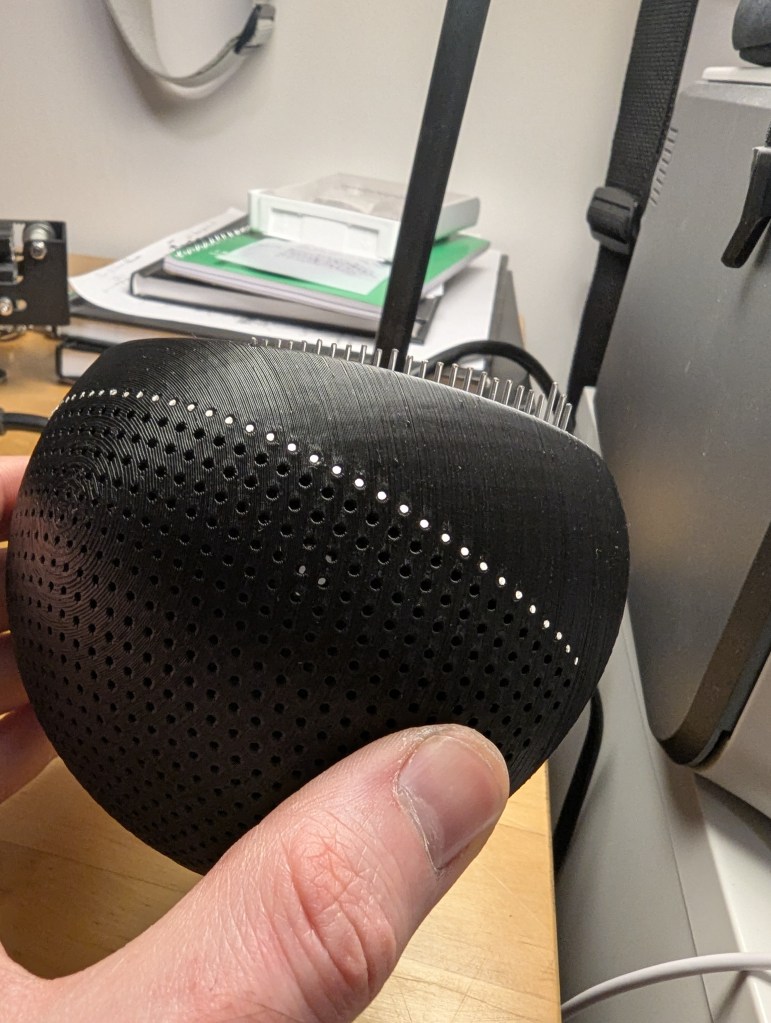
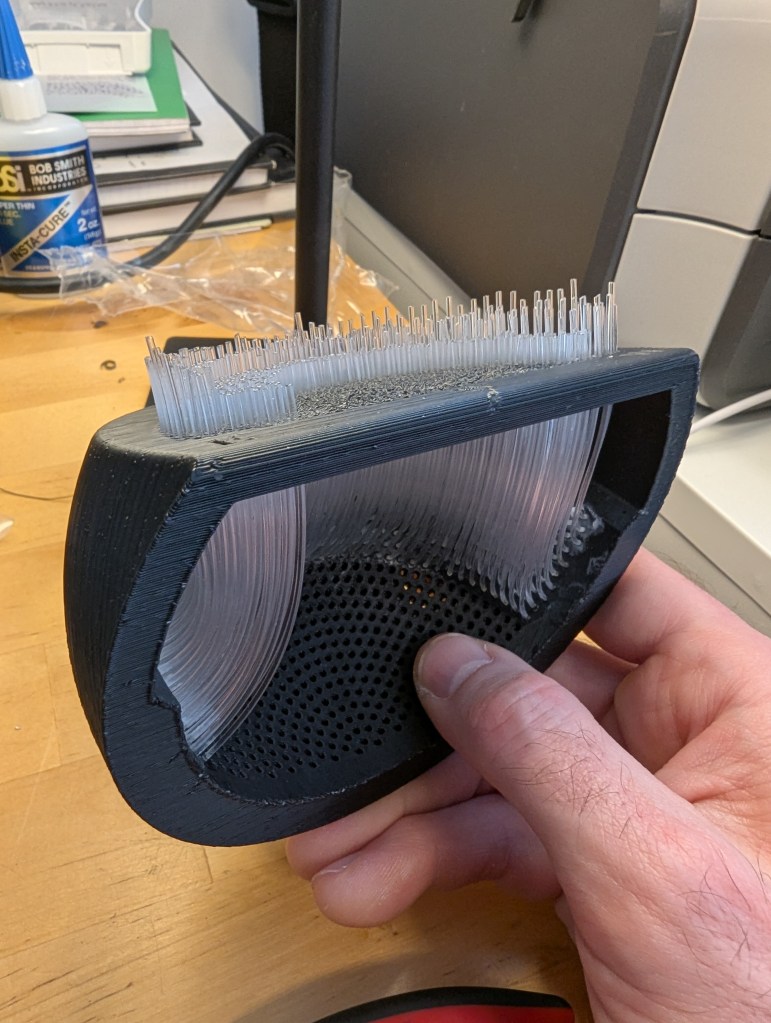
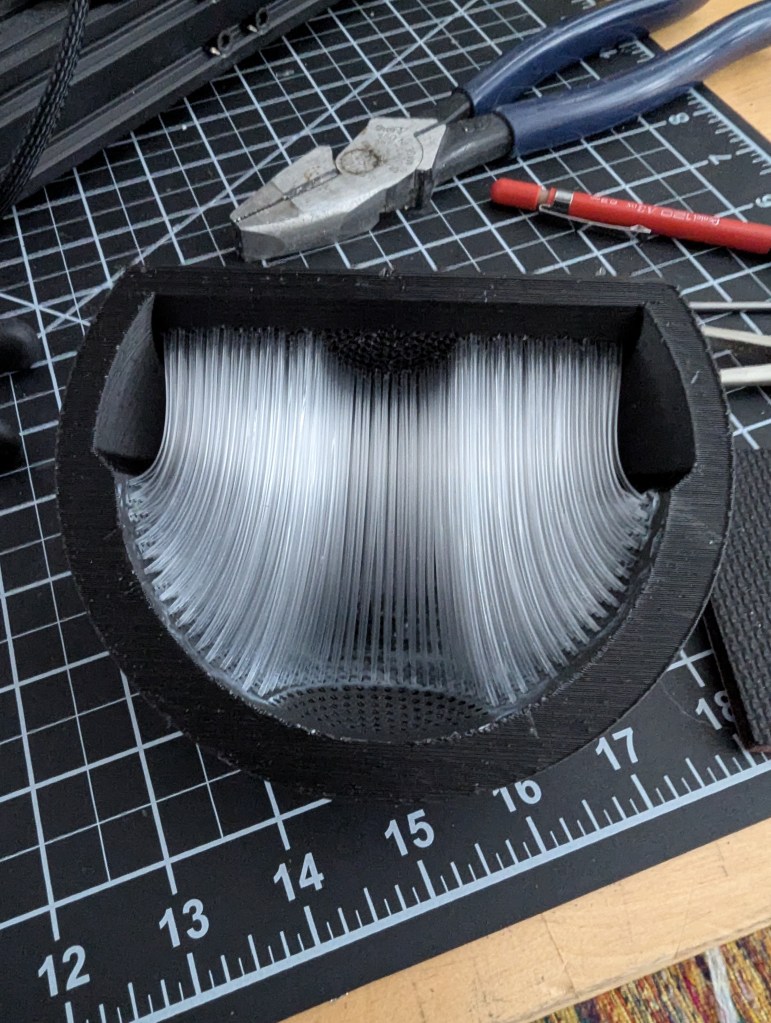
Fiber Optic Sundial
A random idea turned into over a month of work and all I’ve done is what has already been done, but I did it my way.
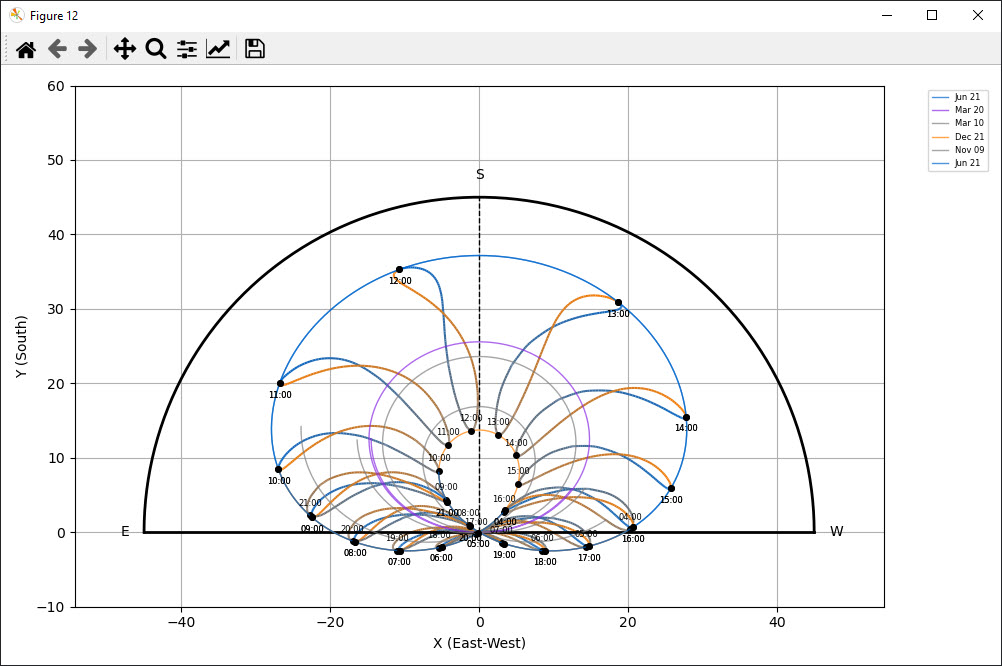
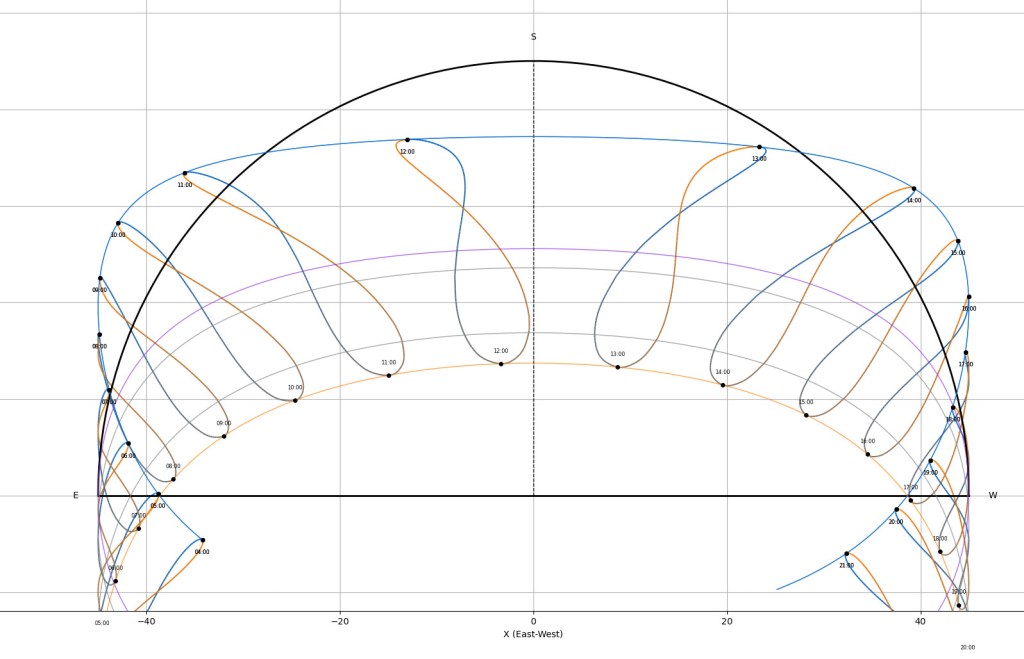
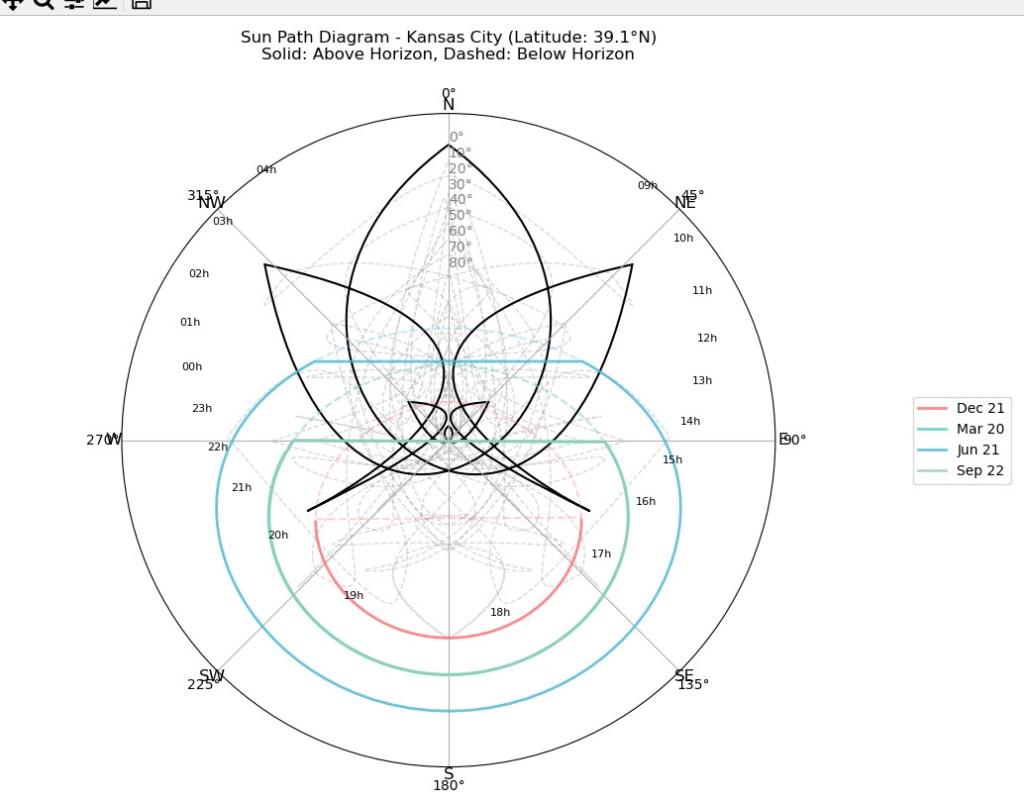
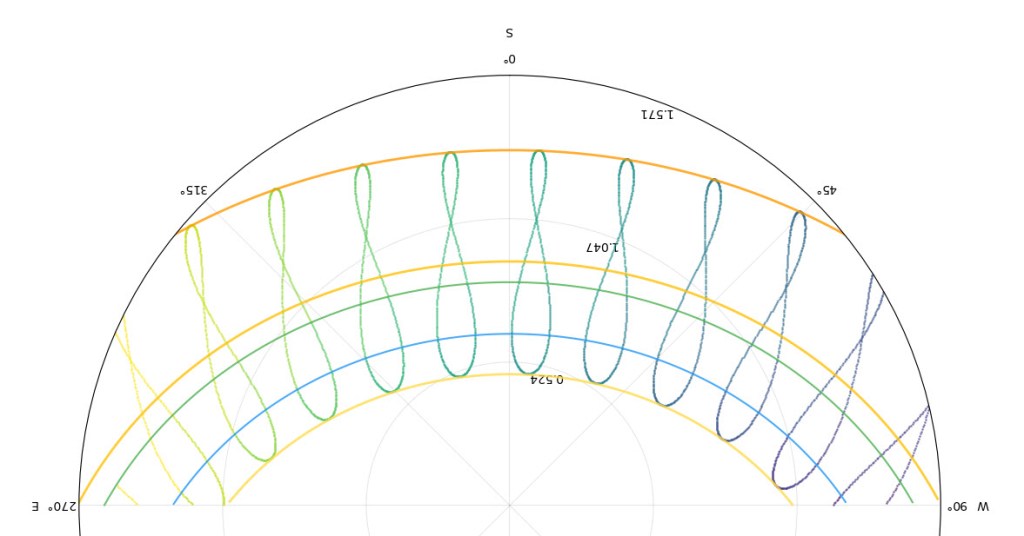
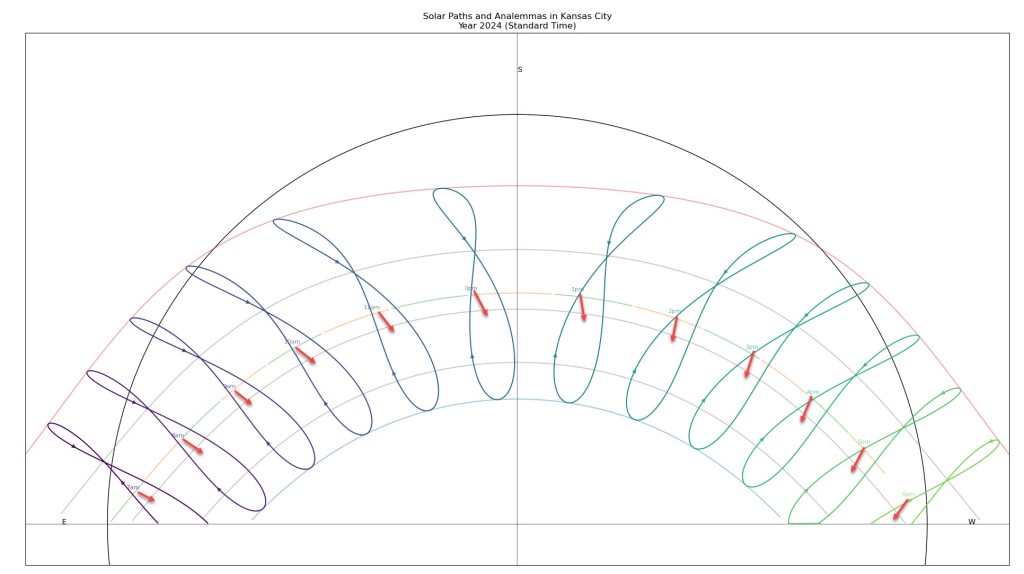
There’s a unique position of the sun for every time of day on every day of the year. Sundials operate on this principle by projecting a shadow onto a plane (typically) which then has markings to indicate the time. The sundial I devised here skips the shadow step and instead projects the sunlight itself.
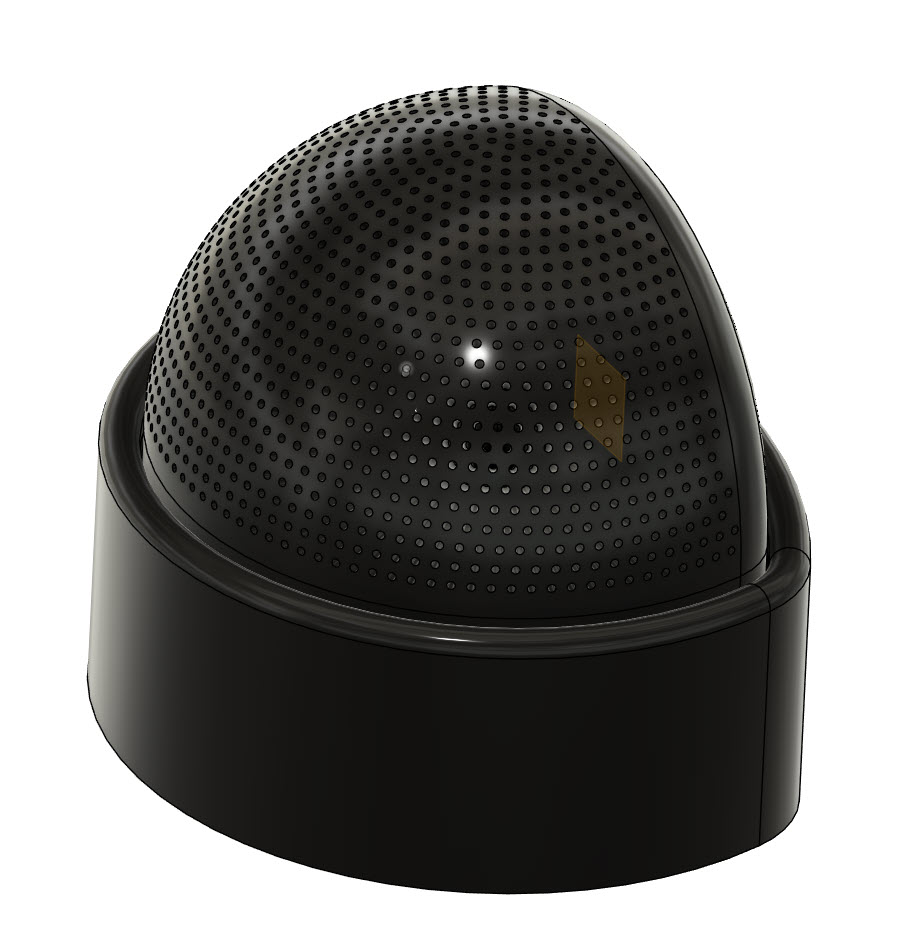
The idea is simple, point a bunch of fiber optics toward the sky and use the output of these fibers to tell the time. In practice, this is challenging. The number of fibers, their placement and geometry, the acceptance angle of the fibers, the installation process, and finally generating useful information out the other side is an intense bit of work that, as usual, required multiple iterations before a functioning prototype was generated.
Fiber Optics
When light passes from one medium to another, like air to water, it will bend or refract. This is why a straw in a glass will appear in two different locations. The caveat here is that refraction only works at certain angles. If the light hitting the air-water boundary is at a very shallow angle, instead of moving into the other medium it will instead reflect. It is this reflection that fiber optics use to transmit light efficiently. As long as the fibers are not bent in such a way as to make that shallow angle too large, the light will almost perfectly reflect back into the fiber – total internal reflection.
Hole Configuration
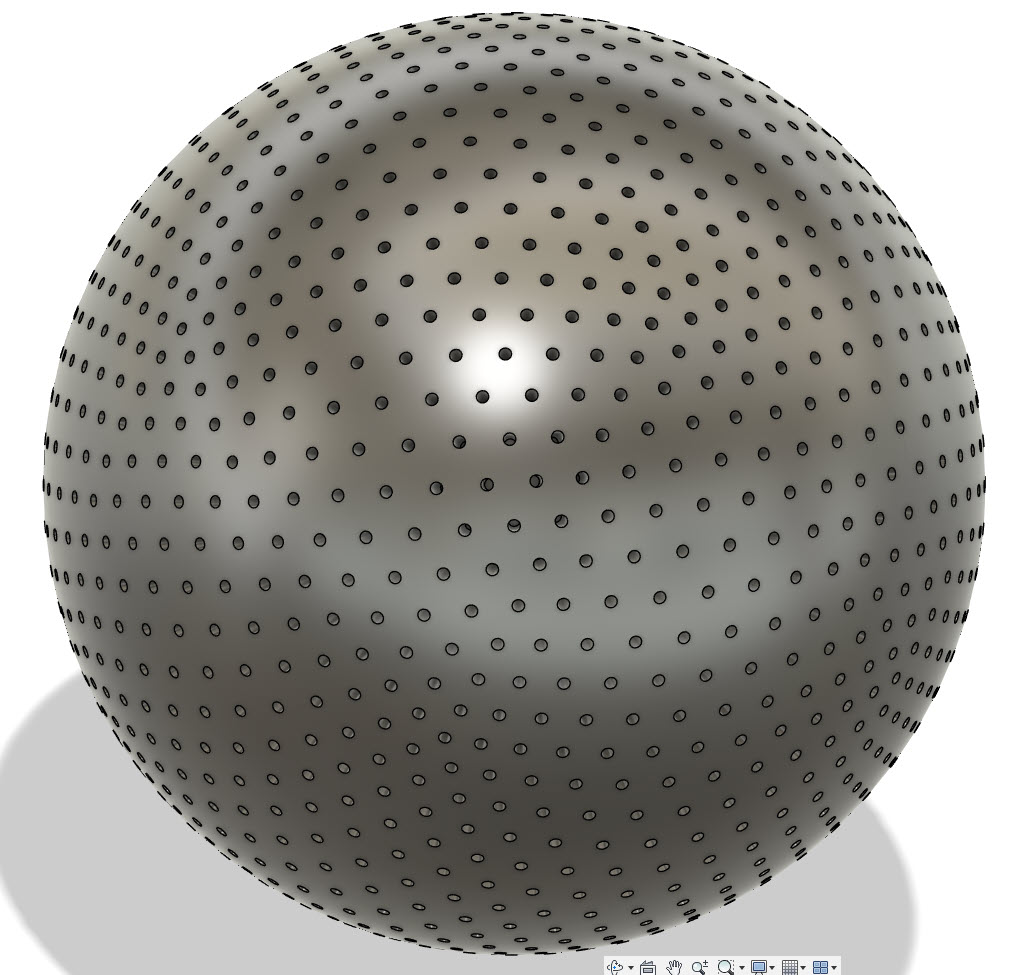
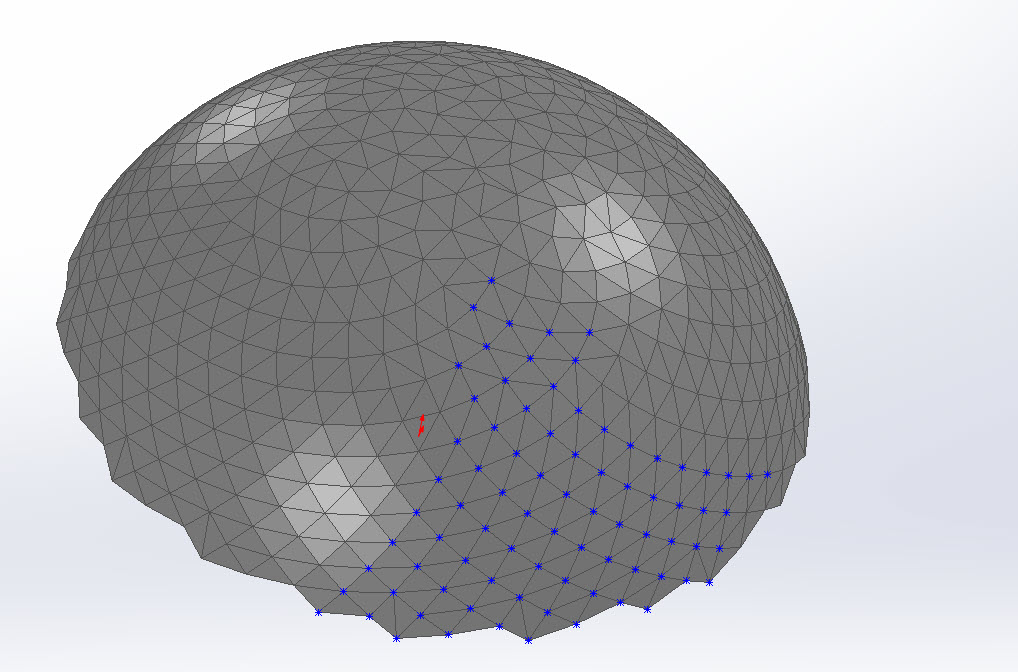
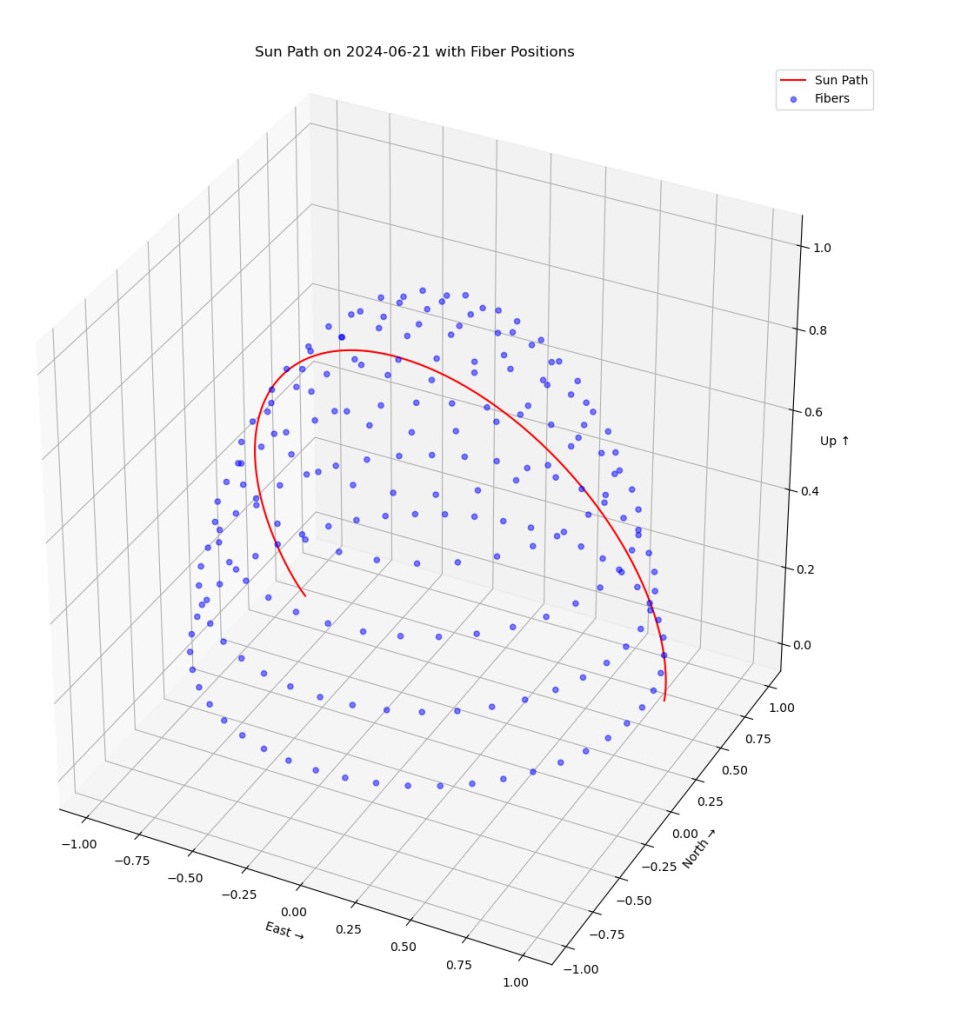
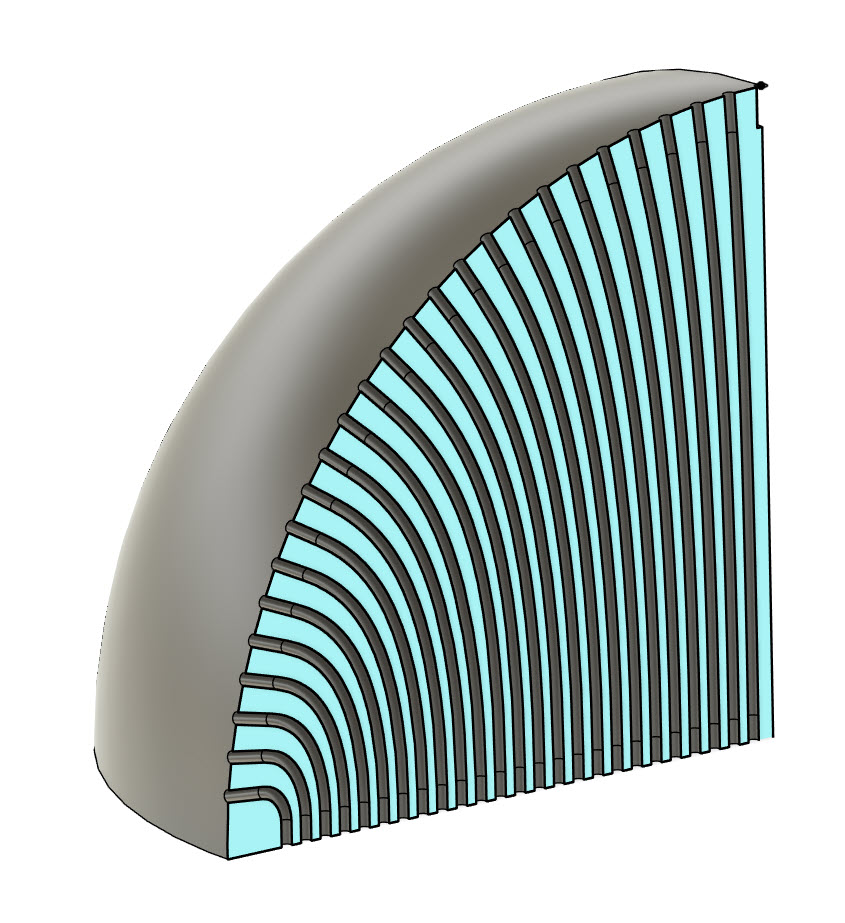
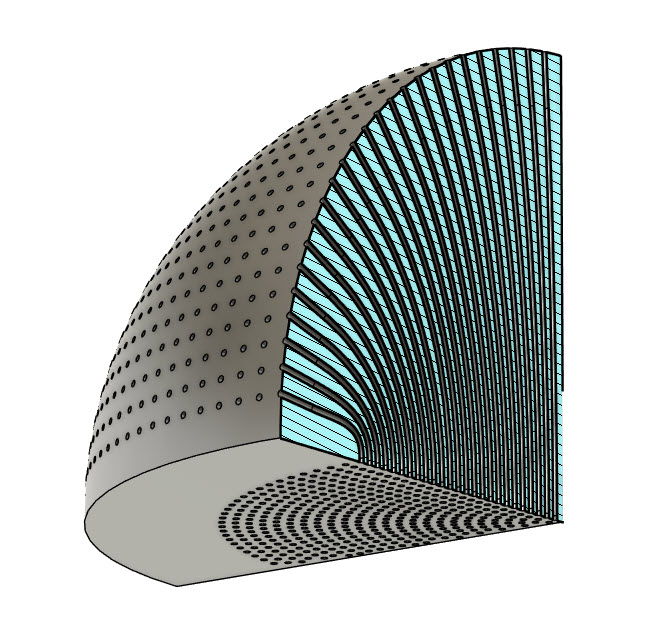
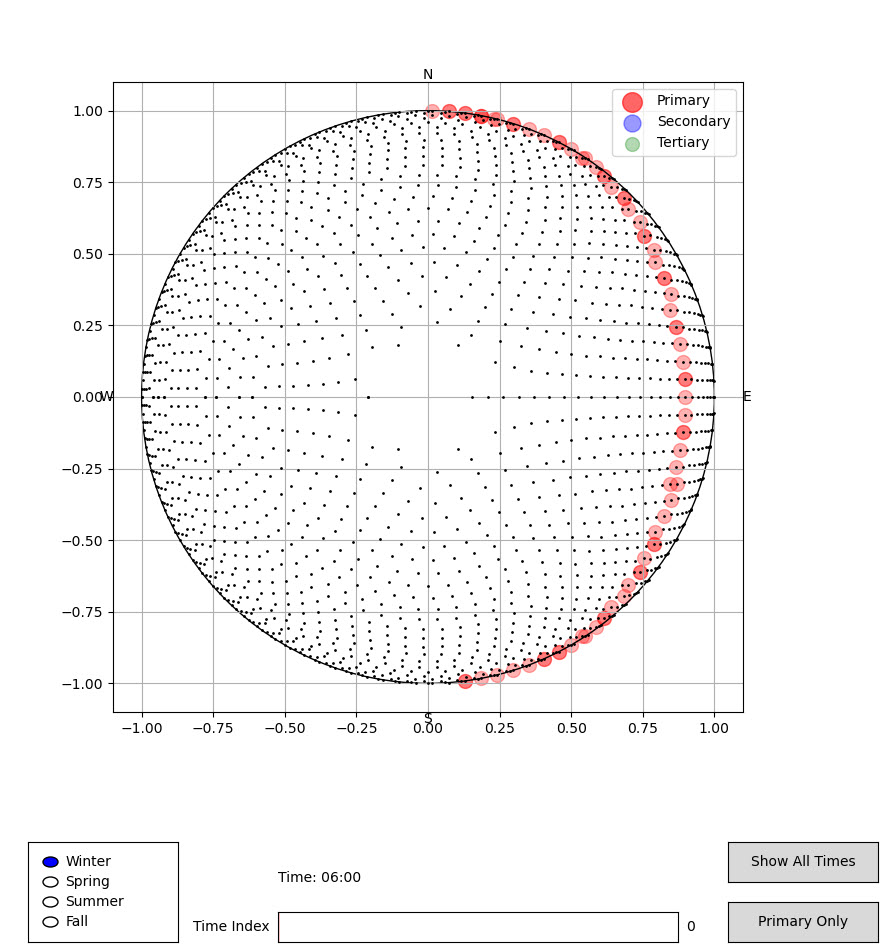
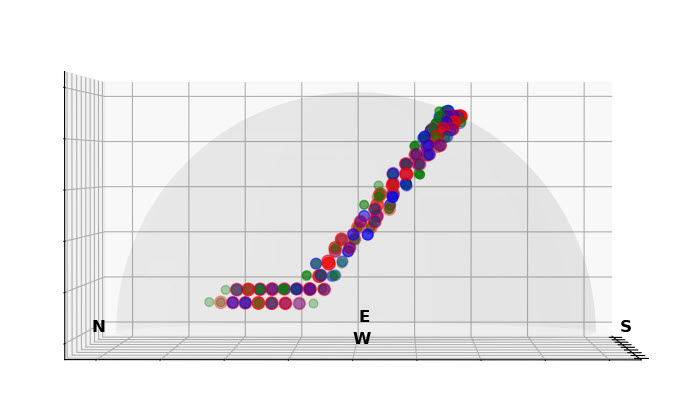
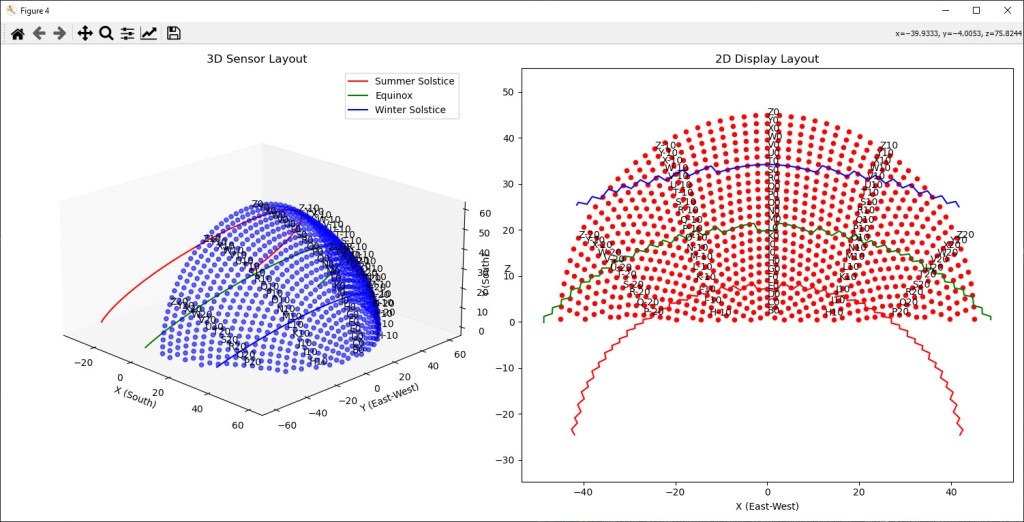
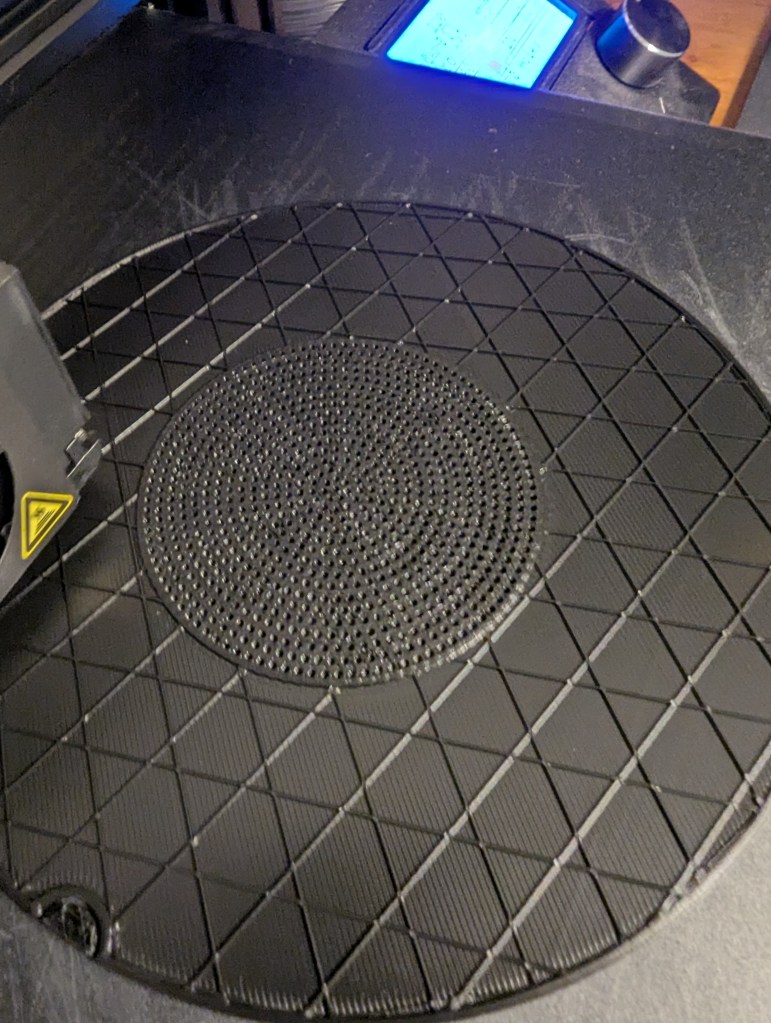
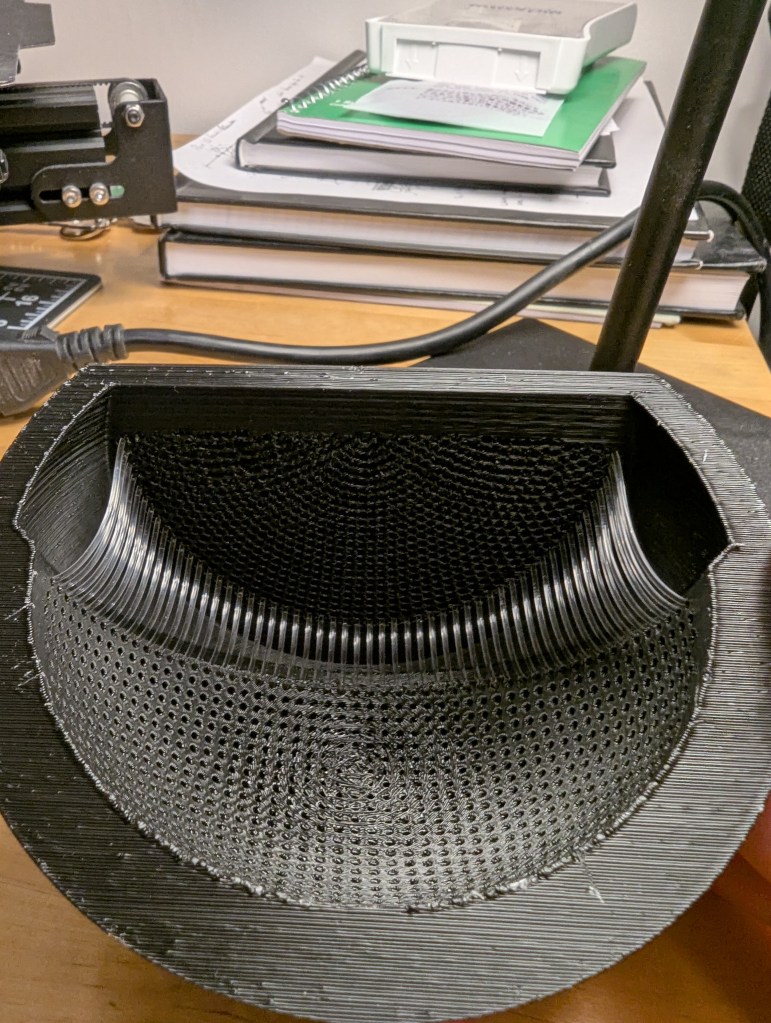
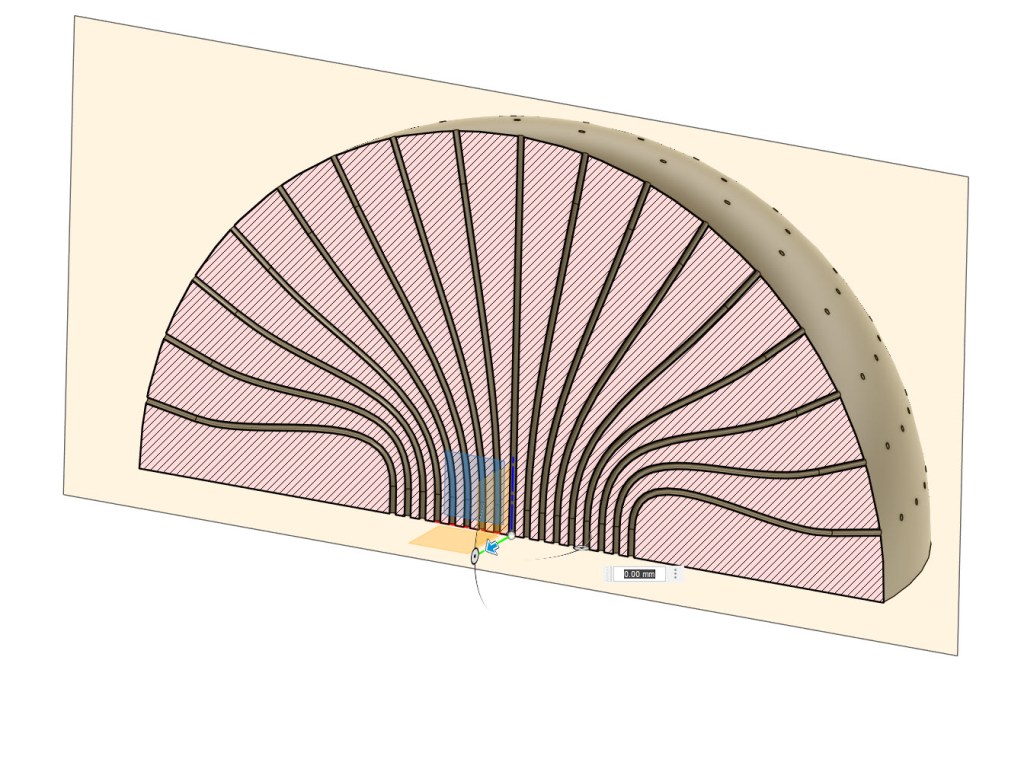
How to arrange the fibers in such a way as to optimize for this problem? The ideal case is no separation between fibers, resulting in a continuous output that truly represents the sun’s position, but spacing is required do to the spherical shape combined with the constant fiber diameter that a sky-facing sensor requires mean they must have at least some separation. A few of the attempts are shown below: geodesics, Fibonacci spiral, and simple rows. Despite the benefits of geodesics and the Fibonacci spiral approaches (more uniform angular offsets, tighter packing configuration), simple rows could yield only slightly worse characteristics, but were much much easier to route through the volume of the sensor as I could leverage patterning in the CAM software (Fusion was superior to Solidworks for this). Claude (an LLM like ChatGPT) was used to generate scripts for Fusion 360 to create the geodesic mesh and Fibonacci spiral variants.